Thursday, July 19, 2018

The Cosmic Engineers

This one was a no-no right from the start. Two reporters on a space ship, one of them turning a dial to tune in the radio, gave me difficulties with suspension of disbelief right at the start. People from the 50s supposedly in a future three thousand years away from us. Other things in the science and the narrative were appalling. A guy getting into a pressurized spaceship through the front screen was risible. Then there was a woman, after a 1,000 years in hibernation during which she was conscious, waking up and behaving as if she's been a bit stir crazy for a few days and, incidentally, speaking the same language as the reporter who freed her. Nah. This makes me realize how much SF I swallowed with a naive hunger when I was younger.


This is not really a review since I didn't get more than a chapter or two into the book.

Tuesday, July 17, 2018

The Battle of Forever - A E Van Vogt

After Syzygy (previous post) and a failed attempt to read With a Strange Device by Eric Frank Russell, I resorted to one who has never disappointed: A E Van Vogt. The Battle of Forever snared me immediately. Sure, published in 1971 it’s a bit dated, but I didn’t find myself cringing at any of the technology, just a little bit at the mores. Of course not: this is Van Vogt and right from the start it’s far future super-science.


Modyun is one of the thousand remaining members of the human race, incredibly long-lived, peace loving and totally rational. He doesn’t suffer much from all that emotional gland-related stuff because, well, as this starts out he hasn’t got very much of that icky stuff going on, being mostly a bloody great head with a negligible body. But then he must venture beyond the barrier out onto the rest of the planet, which is now occupied by animals uplifted into human form and intelligence. To do this he grows and eight-feet-tall body to support that head, and begins to experience its effects, especially when he discovers Earth has been conquered by aliens…

It’s the good old stuff.         

Syzygy - Michael G Coney

Syzygy by Michael Coney was first from that stack of second-hand books I picked up in Hastings. I immediately found it a little disappointing. If I had read it when it was published in 1973 my reaction, as a voracious consumer of any SF, would have been different. But the world has moved on since then, and so have I. 

The sfnal idea here is of oceanic plankton breeding every 52 years and, in the process, forming briefly-lived minds to protect itself. These minds control the local blackfish (sharks really) to attack and kill the fish that would feed on the plankton. This effect spills over onto human colonists causing a telepathic amplifier feedback effect on emotions, resulting in violence and various irrational behaviours. In essence: you really don’t want to know what people think of you. The human government responds to this with an attempt to poison the minds and, becoming aware of the humans, they respond by trying to drive the humans into the sea to be torn up by the blackfish. 


Intertwined in this is a human story concerning a bereaved husband falling for the sister of his dead wife, along with a mystery about how she died – all resolved in the final scenes. I’ll go into no more detail about it than that. I found it all a bit prosaic and a struggle to get through because, really, I was after the sfnal hit. In fact, beyond the plankton minds, it all struck me as a bit lacklustre. This could all have been about mind-controlling plankton arriving at the coast of some US town in the fifties. While in science fiction one must suspend disbelief, in old SF one must extend that suspension to cover, in this case: fifty-year-old technology on a colonised planet, and the mores of that time. One just has to laugh a hollow laugh when only a woman is capable of properly cleaning our hero’s house, and when that same hero, upon sensing the thoughts of a pipe-smoking psychologist, has a homophobic reaction that would today have the writer strung up by the thumbs, albeit the reaction was that of the protagonist.  

Wednesday, July 11, 2018

Reading Again


When I was in my 10s, 20s and 30s I used to read huge numbers of books. Over some early years it averaged out at 10 books a month. Maybe this was because the books I read back then were slim SF volumes from the likes of Asimov, Blish, Aldiss etc. As I transitioned into a full time writer that number grew smaller but I still always had a book on the go. Events four years ago (which I have gone on about enough) killed my urge to read, but it has been slowly recovering. Now it seems I have broken through some barrier thanks to Terry Pratchett.


Over the last month I polished off 12 Pratchetts in the collection above. I then felt the urge to return to my habit of old which was wandering around second-hand bookshops in search of sfnal (and fantasy) gems. Last week Julie and I went down to Brighton and then Hastings to visit my old editor, Peter Lavery. There I wandered into a shop and this happened:


My first choice out of these was perhaps the best and, reading Philip K Dick’s Zap Gun reminded me of why I have none of his books in my collection. But onward and upward! Next I’ll try a Van Vogt who, thus far, has never disappointed.

Tuesday, June 19, 2018

Half Breed


"Jackal is proud to be a Grey Bastard, member of a sworn brotherhood of half-orcs. Unloved and unwanted in civilized society, the Bastards eke out a hard life in the desolate no-man's-land called the Lots, protecting frail and noble human civilization from invading bands of vicious full-blooded orcs."


Readers here may remember how a number of years ago I was writing stuff for a Heavy Metal film. One story requested was an orcs and elves battle based on Rorke's Drift (Zulu). I needed superior weapons to keep the hordes of orcs at bay so I went with arbalests wielded by immensely strong half-breed orcs (the children of rape). I called the story Half Breed. Here’s Skander, the leader of that party of orcs.


Because this was story written on request and therefore owned by Tim Miller, who was putting together this Heavy Metal film to sell to Paramount (yeah, Deadpool Tim Miller), I couldn’t publish it. The thing languished in my files and then, as the Heavy Metal thing fell through, continued to languish there. I’ve since written another one called Brawl that might be used in another project I probably can’t talk about (name change from Skander because of US legal wankery). I’ll have to check on whether I can use these when I finally get round to publishing a collection of fantasy short stories.  

Friday, June 08, 2018

The Old Stuff on Kindle and in Paperback

I’ve mentioned elsewhere my steady climb up the writing ladder so I’ll not go into it here, suffice to say that before the big publisher took me on I’d put my hours in with the small presses. As a result of this I did have a number of small things published before Gridlinked hit the shelves.


Some years ago I heard about self-publishing on Kindle, so I put some of these items on there and they’ve been selling in increasing amounts ever since. The last thing I put on there was a collection called Runcible Tales and, while doing that, I saw that Amazon gave an option to publish it as a paperback too. This was interesting.


Runcible Tales sold nicely but there were always those asking about getting hold of the thing in paper which, for whatever reasons, I was reluctant to do (or too lazy).


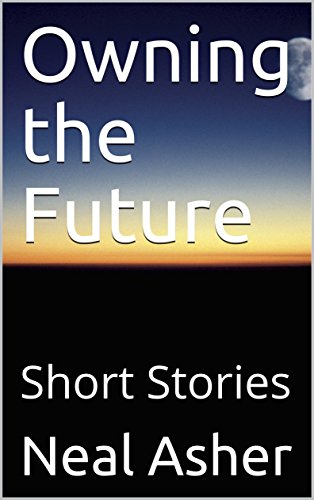
Recently, after finishing editing Book III of Rise of the Jain (The Human), I decided to have a sort out of my short stories. I put those that were in collections into files of the same names, so I had Runcible Tales, The Engineer ReConditioned and The Gabble. This left many single stories that might have been published here and there in anthologies put out by others. I decided to put together a small collection of Polity and Owner stories and called it Owning the Future.


Also in there I found Mason’s Rats. This was a collection of just three short stories that many had enjoyed. They were first published in a small press magazine called Kimota, whose editor, Graeme Hurry, who then published as a small booklet he handed out at an SF convention. I published these on Kindle too.


Next it was time to bite the bullet so I started off by publishing Runcible Tales in paper form on Amazon. That went well enough so I did the same with the rest. There were some hiccups concerning pagination and the covers are quite plain (something I must look into in the future), but now all of the above are available on Kindle and in POD paper. The links below each will take you through to the Amazon UK, but these are also available in the US and elsewhere.   

Wednesday, June 06, 2018

Owning The Future


I've just put this collection up on Kindle. It will also be appearing as an Amazon paperback sometime soon . . .


I have a varied collection of short stories in my files and, of course, the temptation is there to dump them on Kindle, take the money and run. However, though I think some of them are great, some aren’t, and some are profoundly dated. I am aware that there are those out there, who will just buy these without a second thought, so I have to edit, be selective, and I damned well have to show some respect for my readers. Kindle in this respect can be a danger for a known writer, because you can publish any old twaddle and someone will buy it. Time and again, I’ve had fans, upon hearing that I have this and that unpublished in my files, demanding that I publish it at once because surely they’ll love it. No they won’t. A reputation like trust: difficult to build and easy to destroy. 

I’ve therefore chosen stories other people have published here and there, and filled in with those I really think someone should have published. Here you’ll find some Polity tales, some that could have been set in the Polity (at a stretch) and some from the bleak Owner universe. Enjoy!

Neal Asher 04/06/18

  
Stories:

Memories of Earth
I believe I wrote this one as a publicity exercise for Tor Macmillan while they were publishing the Owner trilogy, but then it wasn’t used. I subsequently shunted it off to Asimov’s and they published it in their October/November 2013 issue. There’s also an audible version on Starship Sofa (No. 383).

Shell Game
This appeared in The New Space Opera 2 edited by Gardner Dozois and Johnathan Strahan published in July 2009.

The Rhine’s World Incident
First appeared in Subterfuge from Newcon Press in 2008, next appeared in In Space No One Can Hear You Scream from Baen Books in 2013. This is the story where the swarm AI the Brockle makes its first appearance.

Owner Space
Appeared in Galactic Empires published by Gardner Dozois in 2008

Strood
First appeared in Asimov’s in December 2004, next in Year’s Best SF 10 published by Hartwell and Kramer in 2005. StarShipSofa did an audible version: No. 463

The Other Gun
Cover picture story in Asimov’s April/May 2013. This is a backstory for the Rise of the Jain trilogy – it concerns the Client.

Bioship
This appeared in George Mann’s Solaris Book of New Science Fiction in 2007

Scar Tissue
Not appeared anywhere at all!

The Veteran
There’s an audible version of this on Escape Pod, episode 118, read by Steve Eley – went up there in 2007

Friday, June 01, 2018

Mythos - Stephen Fry


It was good to read stories I vaguely knew written out clearly. That Narcissus fell in love with his own reflection is enduring. Here I learned how the water nymph Echo related, and how the flower came to be. Prometheus’s unfortunate sojourn on the side of a mountain, with vultures eating his liver, was another story elucidated . . . in fact, there wasn’t a story here I did not know some part of, which shows just how ingrained Greek myth is in our culture.  


I particularly enjoyed the language connections that Fry elaborated on like, off the top of my head, that the ‘Ge’ in Geo words like Geology comes from Gaia, the Earth goddess. Having learned Greek (allegedly) and having spent many years on Crete, I also felt this mythology gave me further insight into the working of the Greek mind. It is a fact that your language informs your perspective on reality (and that learning another one gives you a deeper perspective), while Greek myth is firmly intertwined with their language (and ours, though not so firmly).

Do I recommend this book, what with most people reading this blog being SF readers? Well, it was a mostly easy undemanding read, except in some sections, where genealogical lists tended to the boring. But you know what, it’s nice to know, for example, the history of the names in John Varley’s Gaean Trilogy. SF writers have used Greek myths and names more than one might suppose, so go on, educate yourself.   

Wednesday, May 30, 2018

The Fun Police


I do a lot of walking along the sea walls around here – they are in fact some of the best places to ramble in agricultural Essex. A favoured walk is from St Peter’s Chapel out at the end of the Dengie peninsular, round past Bradwell power station to Bradwell Waterside, there to recuperate with a drink and a bag of nuts in the Green Man, then back to the starting point. In all it’s about 8 miles. While taking this route it’s nice to stray onto the beach for a while, or pause to take in the scenery. A good place for doing the latter is from the tops of pillboxes (WWII defences) incorporated in the sea wall. They provide a perfect platform. Or, at least, they did.


Now it seems the nanny state and the fun police have struck again. Can’t be having us plebs walking out on these things. No safety rails you see. Someone might fall off and instead of this sensibly being seen as a valuable contribution to the Darwin Award, it’s to be frowned on. Of course, the council, or whoever put these fences here, is not entirely to blame. In my childhood, should I have fallen from something like this, my father would have added to my injuries with a clip round the ear for being such a dozy prat. In today’s litigious society, that’s not what happens, and woe betide any council that allows the children of generation snowflake to stray near potential harm.


More and more I see the future Britain full of strictly controlled and managed parks, where blobby people can motor along the neat paths on their invalid scooters, and where children bounce along looking like the Marshmallow Man in their safetywear, perhaps pausing to inspect the patches of stinging nettles and thistles growing behind Perspex screens.        

Thursday, May 24, 2018

Red Sister and Sharp Ends

I haven’t been reading many books over the last few years. I put this down to events of over four years ago when I ceased to take pleasure in anything. By and by my enjoyment of most things has returned but with the reading, not so much. Too often in the last few years I’ve picked up books and then lost interest in them – the whole idea of continuing to read them seeming a chore. I therefore began to think that maybe this was a pleasure that would never return and that, after years of reading books and years of writing the buggers, I’ve become jaded with them.

To a certain extent, this may be the case. I’ve found that books I used to love quite often annoy me, especially when I hit continuity errors and other mistakes, and slip into a dispassionate editing mode. Or when I read others and find myself baffled by my earlier enjoyment of them, or when I read a writer whose language I loved and now find just irritating.

However, I do still come across books, and writers, who do the job. David Gemmell is one such writer, while Peter Hamilton is another. Recently, while in a bookshop, my girlfriend waved a book at me that for some time I’d been talking about buying and reading. This was Red Sister by Mark Lawrence. I took that and, while there, noted Joe Abercrombie’s short story collection Sharp Ends, and picked that up too.


Incidentally, both of these writers were introduced to me by way of their publishers hawking them around for nice comments to put on the covers. In each case, I had no problem with this. I have ARCs of The Blade Itself by Joe Abercrombie and of Prince of Thorns by Mark Lawrence, and then went on to buy the ensuing books of, respectively, the First Law and the Broken Empire trilogies.


Anyway, these two books . . . I polished them both off in under a week. I guess this is the point where I should wax lyrical about the hard gritty fantasy of these two writers with its lack of fluffy elves, and its excellent memorable characters. Perhaps I should mention how unputdownable was Red Sister, or how just a small bit of dialogue between characters in one of the Abercrombie short stories had me snorting tea out of my nose? No, I will not. All I will say is that for this jaded old misery these two books are the good stuff.

Recommended.

Tuesday, May 15, 2018

Reddit AMA

The author AMA is now open:
https://www.reddit.com/r/sciencefiction/comments/8jn3kw/im_neal_asher_science_fiction_writer_ama/

Reddit AMA

I'll be doing a Reddit AMA (ask me anything) at 6PM UK time.

https://www.reddit.com/r/sciencefiction/comments/8igmgj/upcoming_amas/

You should be able to find it somewhere here at that time:

https://www.reddit.com/r/sciencefiction/

Hello people, Neal Asher here.

Here are the nuts-and-bolts of who I am, or maybe more correctly, what I do: I once was a hungry aggressive SFF writer struggling to get the odd thing published and writing new stuff on the back of rejection letters. I spent years running at that particular brick wall with my head, until something finally broke . . . I then spent years of getting short stories, novellas and the like published in the small presses (and earning some way below zero for them). A big publisher, Pan Macmillan, finally took me on and brought out my first full-length SF novel, Gridlinked, in 2001. A year or so later I took the risk of giving up my day job and now I’m about 25 books in. Most of my stuff is set in the ‘Polity’ – a far future human/AI society that is pretty utopian, except for the hostile aliens at the border, the occasional psychotic AI, a war that burned up a few hundred worlds and a civilization-destroying alien technology . . . you get the picture. If this is your kind of thing (described as post-cyberpunk space opera, apparently) then search engines will turn up all you need to know. You can find my website at nealasher.co.uk. The blog there is copied across from http://theskinner.blogspot.com while I can also be found on Twitter @nealasher, on Facebook at neal.asher and of course here on Reddit.    

My latest book, The Soldier, is the first in a new trilogy with the overall title Rise of the Jain. Jain technology is the one mentioned above. You might like to ask me why I named a hostile alien technology after a peace-loving religion and my answer will be suitably glib!

Here’s the blurb:

Her mission is vital. Her failure is unthinkable.
A hidden corner of space is swarming with lethal alien technology, a danger to all sentient life. It’s guarded by Orlandine, who must keep it contained at any cost – as it has the power to destroy entire civilizations. She schemes from her state-of-the-art weapons station, with only an alien intelligence to share her vigil. But she doesn’t share everything with Dragon . . .
Orlandine is hatching a plan to obliterate this technology, removing its threat forever. For some will do anything to exploit this ancient weaponry, created by a long-dead race called the Jain. This includes activating a Jain super-soldier, which may breach even Orlandine’s defences.
Meanwhile, humanity and the alien prador empire keep a careful watch over this sector of space, as neither can allow the other to claim its power. However, things are about to change. The Jain might not be as dead as they seemed – and interstellar war is just a heartbeat away.
The Soldier is the first novel in the Rise of the Jain series, by bestselling science fiction author Neal Asher.


This is an AMA so go ahead and ask me anything. I can’t guarantee I’ll answer, or maybe be any more than flippant, but I’ll give it a shot.

Thursday, May 10, 2018

Locus Review of The Soldier

Nice review in Locus from Russell Letson of The Soldier. You can buy the magazine here. Here's a little of it:

But I get ahead of myself. The Soldier: Rise of the Jain Book One opens a new set of chapters in the story of the infiltration of Jain technology into the Polity/Prador neighborhood. The story hosts a reunion of characters from earlier books: the Jain-taming haiman (AI-enhanced human) Orlandine; the Jain-spreading creature once called the Legate, now Angel; and one of the ancient, moon-sized, enigma-loving aliens called Dragon. New characters include familiar Asherian types: a couple of Hoopers, nearly-indestructible humans from the everything-eats-everything planet Spatterjay; some disturbingly upgraded and cooperative (if still vicious) Prador; and miscellaneous snarky battle drones and AI warships. They are joined by some even stranger creatures, often singletons of various kinds: relicts and lone survivors, the creation of a rogue AI war­ship, self-redesigned cyborgian entities.


I had thought with the Transformation trilogy (Dark Intelligence, War Factory, Infinity Engine) that Asher had maxed out what could be done with the Polity setting – that the near-metaphysical im­plications of the fate of Penny Royal constituted a kind of narrative event horizon. I think I might have been mistaken.

Monday, April 23, 2018

Book Signing

  • [Neal Asher signing The Soldier]
NEAL ASHER will be signing THE SOLDIER at the Forbidden Planet London Megastore on Thursday 17th May from 6 – 7pm.
The first novel in the brand new RISE OF THE JAIN series!
A hidden corner of space is swarming with lethal alien technology, a danger to all sentient life. It’s guarded by Orlandine, who must keep it contained at any cost – as it has the power to destroy entire civilizations. She schemes from her state-of-the-art weapons station, with only an alien intelligence to share her vigil. But she doesn’t share everything with Dragon . . .
Orlandine is hatching a plan to obliterate this technology, removing its threat forever. For some will do anything to exploit this ancient weaponry, created by a long-dead race called the Jain. This includes activating a Jain super-soldier, which may breach even Orlandine’s defences.
Meanwhile, humanity and the alien prador empire keep a careful watch over this sector of space, as neither can allow the other to claim its power. However, things are about to change. The Jain might not be as dead as they seemed – and interstellar war is just a heartbeat away.
Neal Asher lives sometimes in England, sometimes in Crete and mostly at a keyboard. Having over twenty-five books published he has been accused of overproduction (despite spending far too much time on the social media, or kayaking and walking) but doesn’t intend to slow down just yet.

Event Locations & Times

London Megastore
Thu 17 May 2018
From 18:00 to 19:00

Tuesday, March 13, 2018

The Soldier Covers

Here are the full covers of The Soldier in hardback and trade paperback. Nice quotes here from some big beasts in the SF world. Unexpected.


Friday, March 02, 2018

Exercise Sweet Spot

Damn, how much exercise is too much? I never seem to be able to hit the sweet spot.

In the last months I was going to the gym 3 times a week for an hour plus each time (over a number of weeks I'd taken it up from three-quarters of an hour). This exercise consisted of 20 mins warm-up on a rowing machine or cross trainer, followed by a varied selection of weight lifting. I seemed to be rolling along fine with that. I then changed it to half an hour in the morning on weekdays, except for one day when I went in the afternoon and did about an hour. This was because I was dopy in the morning and it seemed to take forever to get going. I thought this might give me a boost and it did. For a week I was fine and much more awake. I steadily upped the time to (thus far) 37 minutes and then just as steadily, along came increasing midday knackerdom and the need for a ‘power knap’ (which always sounds better than a snooze on the sofa).

One of the things that came across in various articles I read was that if your basing your life around your exercise then you’re getting a bit OCD with it. Well I guess I am in the sense that my work is suffering because I’m wearing myself out. Another thing I read was that, per week, 150 mins of moderate exercise or 75 mins of intense is a kind of minimum, while 3 to 5 times that is best. I was doing the 3x – about 3.5 hours intense, but dropping 3 hours when I moved to the mornings and steadily climbing again. But it didn’t seem to work out so well.

I guess one has to look at other factors. I’m no spring chicken anymore; I’m 57 (Fuck! How did that happen?). It could simply be that I need to slow down a bit and get more rest, which is an idea I do not like at all. Also, though there’s no blood involved, men go through hormonal cycles. Perhaps I just hit a testosterone dip or something? Then there’s the time of year and the weather. It’s Winter and like us all I definitely slow down at this time of year. Also, right now, it’s Siberia outside. It’s not beyond reason to suppose evolution has provided us with a genetically transcribed instruction: ‘Snow, cold, slow down shutdown and conserve.’

Anyway, in the end I can read all sorts of articles on the internet about this sort of stuff, but always they fail to apply to me. A lot of strength training bumph is focused on the age groups ten or twenty years behind me, where you can basically get away with hammering your body. Look at ‘senior’ stuff and it’s always ‘you need to maintain your health with a little gentle exercise’ and ‘take advice from your health practitioner’ and, essentially ‘don’t go taking my advice and blowing the rivets out of your heart’.

I guess I’ll just have to keep altering things, trying new things, and hoping to find the exercise sweet spot for me.